On the occasion of the 250th anniversary of the birth of Miss Jane Austen.
Written “By a Lady” is a very special, even enigmatic, byline of sorts; and as thus did Jane Austen identify herself on the title pages of the four novels published in her life time. Was it modesty that prevailed or common-sense? To name herself; an unnecessary exposition perhaps, a vanity well suited to the social aspirations – and frivolities – of the landed class of Regency England from which she was not so far removed but not something to be trumpeted from the genteel surrounds of Chawton beholden to the conventions of village life? But, whilst closeting most of herself in anonymity, her gender Jane Austen seemed obliged to share – written “By a Lady”. As if to say: Please know that what you are about to read comes with all the sensibilities of a woman.
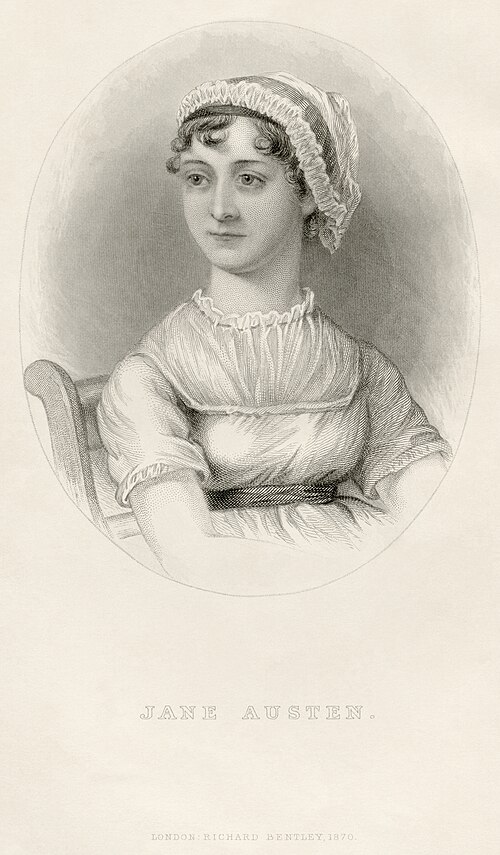
So it is that today we celebrate the 250th anniversary of the birth of the remarkable Jane Austen. In some respects the Brits and greater Anglophone world have been celebrating her all year with exhibitions, lectures, new editions, commentaries, etc., but in many respects very many more people all over the world pay tribute to her all the time in a multitude of ways: generation upon generation reading, studying, analyzing her work; being inspired by her literary genius, her gifts of observation, her humor, her optimism; translating her work, adapting her work into other art forms. A more beloved writer, a more iconic literary figure, is difficult to find. And how enigmatic she remains! We don’t really know what Jane Austen looked like nor have we an unprejudiced version of her personae and manner, and must depend on her sister, Cassandra’s depiction and hearsay and portraiture of other young women from the period. Much of her extensive correspondence was destroyed (again, Cassandra!) and all has been shaded in the last century of so by various factions competing for the right to define her narrative, and in more recent times all the countless cinematic portrayals of her work and pertaining to her person that show no sign of abating.
Earlier this year The Morgan Library and Museum in New York City had an exhibition dedicated to Austen, spotlighting the manuscripts in their possession and those held at Goucher College in Baltimore (both bequeathed by Alberta Hirshheimer Burke.) A video promotion is still available on YouTube:
Miss Austen does have of course a significant presence in the internet, but very many sites do seem to be, either directly or not so, selling something! (Well, why not?) This one not: Jane Austen’s World, a personal blog out of the United States, appears to be simply a labor of love. To be found a bevy of information and links, not just specific to Austen but also the world and society in which she lived and wrote. (Unlike Jane’s narratives and characters, some of the links are as dead as Regency era door nails, but many are not!)
Happy birthday Jane! (If I may be so bold as to address you as Jane?)